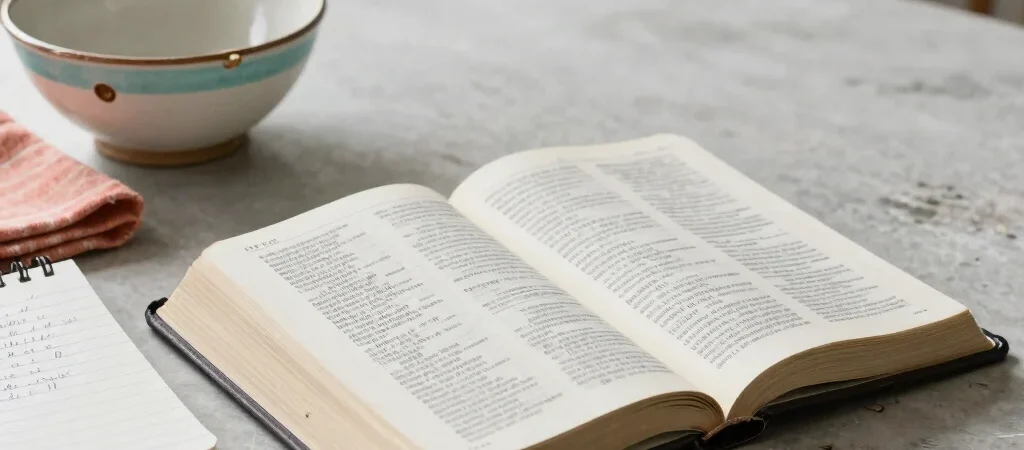
A chipped bowl on the table can pull your eye away from a page. That is not necessarily a problem, and it does not mean the bowl carries a hidden spiritual message. Sometimes an ordinary thrift find is simply a good reminder to slow down and notice what is actually in front of you.
Start With the Text
Before reaching for a metaphor, read the passage in full and mark the details it gives you: who is speaking, what changes, and which images return. A handwritten question in the margin can keep the study grounded. If an object nearby makes you think of the text, note the connection as your response, not as the passage’s one required meaning.
For example, a worn cup might prompt you to ask what the passage says about shared meals or daily provision, if those ideas are already present in the verses. If they are not, let the cup remain a cup. That small distinction keeps reflection open without making the Bible say more than it does.
Make Room for the Unfinished
Keep a scrap of paper beside your Bible and write two columns: what the text says, and what it brings to mind. The second column can hold memories, questions, and even a thrifted object’s worn edges. You do not have to settle every connection before you close the book.
That is one reason a lived-in table suits this kind of study. It holds the useful and the imperfect together: an open page, a mug ring, a cloth that has seen better days. Leave with one honest question to carry forward, rather than a polished answer you do not believe.