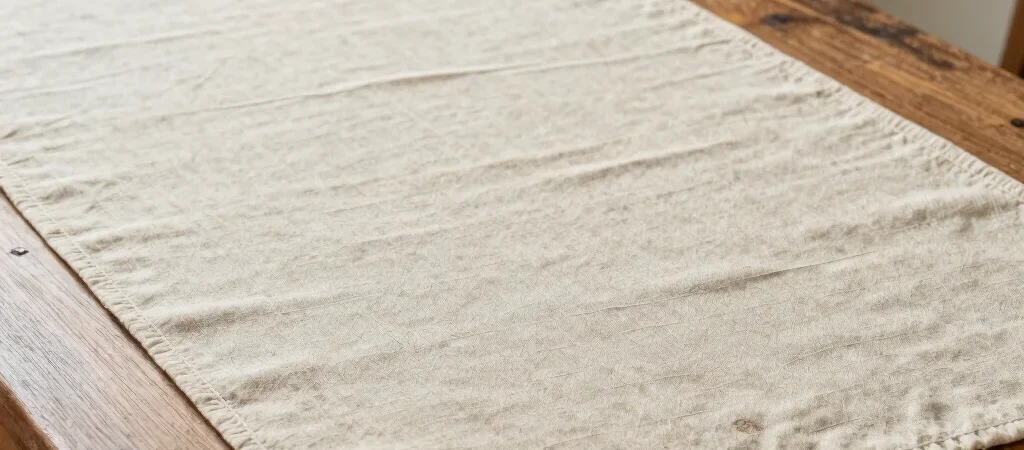
A folded tablecloth can hide its most useful details. Before bringing home a thrifted runner or set of napkins, open it up and look at the places that have done the most work: hems, corners, fold lines, and the center where dishes may have rested.
Look Beyond the First Impression
Hold the fabric toward the light to find thin patches, small holes, and uneven fading. Check the seams for loose threads, then look for old stains that may not lift with washing. A little softness is part of a well-loved linen’s appeal; a brittle edge or a weakening seam is a different kind of story.
If you can, unfold the whole piece rather than judging it by the visible corner. Notice whether the size suits your table, and whether a small flaw would bother you in daily use. A faint mark on a cloth meant for a busy kitchen may be easier to live with than a damaged hem that will keep unraveling.
Bring It Home Thoughtfully
Unknown fabric deserves a gentle first wash. Follow any care label, wash the item separately, and test stain treatment on an inconspicuous spot before trying it on a visible mark. Hot water or a strong bleach can do more harm than good when you do not know the fiber or how it was dyed.
Then give the cloth a real job: under a stack of books, across a small table, or folded beside the dishes. The best secondhand find is not always flawless. It is the one whose wear you understand and whose next use feels worth making room for.